Japanese Knotweed
Has your property been damaged by invasive plant growth?
The presence of Japanese knotweed on a property is a serious issue, as it can lead to structural damage, legal liability and a decline in property value. If you’ve found knotweed on your land or received notice from an affected neighbour, Complex Law can help you uphold your rights and protect your legal position.

The Facts
What is Japanese knotweed?
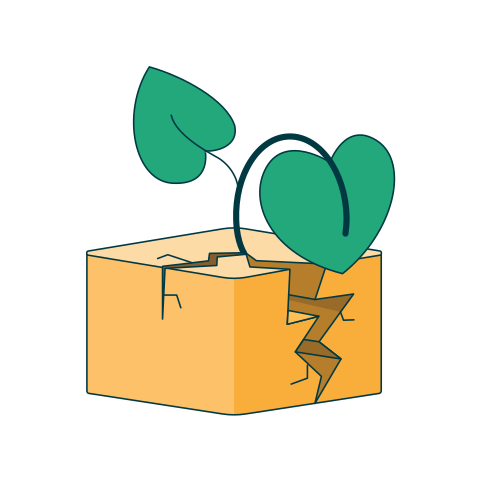
Japanese knotweed (Fallopia japonica) is a highly invasive plant native to East Asia known for its rapid growth. It can reach several metres in height and form dense thickets. Its ability to cause structural damage and regenerate from even small fragments makes it a significant problem, requiring professional intervention for control and management.
The law
While it's not unlawful for a neighbouring homeowner or business to have Japanese knotweed growing on their land, allowing it to spread from their property to others is illegal. Under UK law, including the Anti-social Behaviour, Crime and Policing Act 2014, the Environmental Protection Act 1990, and the Wildlife and Countryside Act 1981, spreading Japanese knotweed can lead to legal action.
Your rights
If your neighbour neglects to contain Japanese knotweed from encroaching onto your property, if a surveyor overlooks it, or if a property seller falsely denies its presence, you may have grounds for compensation. Individuals or organisations allowing knotweed to encroach on your property could be liable for removal costs and damages if the plant devalues your property.
Next steps
Before taking action, consult a professional specialist to identify the plant. If it is Japanese knotweed, you should follow their advice for the best way to remove and dispose of it. If you believe that its presence on your property is due to negligence by a neighbouring property owner, or failure to disclose by a seller or surveyor – or you're worried about your own legal position – speak to Complex Law.
How Complex Law can help
Our success in handling Japanese knotweed claims has been recognised by prominent publications such as The Times, The Telegraph, The Guardian, Property Mark, Express and various other reputable outlets.

Issues we can help you with
We provide assistance in identifying and evaluating your Japanese knotweed issue, assessing whether there is a route for legal action against those responsible, or defending claims against you relating to knotweed.
Managing your claim
If you decide to proceed with a claim for Japanese knotweed, we’ll assign a single point of contact to manage the case on your behalf, including gathering evidence and liaising with the relevant agencies.
No-win, no-fee model
Our team comprises experienced professionals who specialise in compensation claims associated with Japanese knotweed. If you're making a claim against a third party, we can offer our services on a no-win, no-fee basis.
How we calculate costs
In no-win no-fee compensation claims, we take 25% plus VAT of any compensation you are entitled to as our fee. If the claim is unsuccessful, you won't be charged any fees. In other cases, for example, defending a claim, we offer a transparent fee structure with clear costs agreed up front.
Do you have a claim?
If you’ve incurred loss of value or damage to your property due to the presence of Japanese knotweed, you may have grounds for a claim. Do any of the points on our checklist apply to you?
If so, you may have a valid claim to pursue against the party responsible. Speak to Complex Law for clear next steps.
Claim checklist
Did whoever sold you the property fail to notify you the plant was present?
Did a surveyor fail to identify the presence of Japanese knotweed?
Has Japanese knotweed from a neighbour's land spread to your property?
Has Japanese knotweed caused property damage or loss of value?
Legal services tailored to your needs
Our practice is focused on three areas of law: Consumer Claims, Individuals, and Businesses (Complex 360), making it easy to match your legal issue with the right team and strategy.
Consumer Claims
If you’ve been missold a loan or targeted by fraudsters or scammers, you don’t have to face the fallout alone. We’ll represent you on a no-win, no-fee basis.


What Others Say
Hear from our past clients
We’re proud of our success rate. Over the last four decades, we’ve helped thousands of clients secure the judgments, compensation, settlements, or resolutions they were seeking.
Excellent rating
Paul W
Ridiculously easy to check and apply. All the searching is done for you in literally one minute. A soft credit check is required but doesn't impact your score. Go and claim what’s rightly owed!
Kathleen H
This is the first time I have contacted Complex Law. It was easy and I got a quick response. I was shocked how many finance companies they found within half an hour. There was no way I would have remembered these companies.
Sidali S
Really pleased with how easy it was to fill out the complaint form. The layout was clear, and the steps were simple to follow, which made the whole process quick and stress-free. It’s great to see such an efficient and user-friendly system in place.
Frequently asked questions
If you don’t find the answer to your question here, get in touch with us and we’ll be happy to help.
The plant has distinctive features: tall, hollow stems resembling bamboo, large heart-shaped or shovel-shaped leaves, and clusters of small, creamy-white flowers in late summer. During the winter, the plant dies back, leaving brown, woody stems. If you’re not sure whether the plant you’ve noticed is definitely Japanese knotweed, it’s best to seek expert advice. Complex Law can put you in touch with a horticultural expert who can make a positive identification.
You should not try to remove it yourself, as damaging or disturbing the plant can cause it to spread further, including to neighbouring properties. The UK has laws in place to control the spread of Japanese knotweed, so you should always use professional services to ensure compliance. If you think you’ve identified Japanese knotweed on your property, speak to Complex Law and we’ll advise you on the best course of action.
Yes, property owners can be held liable if Japanese Knotweed from their land spreads to neighbouring properties. It's important to manage and control its growth responsibly. If it encroaches onto adjoining land, you could face legal action for any damage caused or costs incurred due to its removal.
The presence of Japanese Knotweed can significantly impact property transactions – it can deter buyers, affect mortgage eligibility, and potentially lead to decreased property values. Sellers are legally required to disclose its presence, and failure to do so can result in legal disputes. Buyers are advised to conduct thorough surveys to verify the absence of the plant.
Japanese knotweed primarily causes property damage through its extensive root growth – the plant has a dense network of fast-growing roots that can undermine building foundations, paved areas, and walls, and damage drainage or sewage systems. If you find Japanese knotweed on your property, it’s essential to act fast, as this type of invisible damage may already be occurring.

.svg)