Legal risks every landlord should understand
.webp)
Summary
Landlords in England face legal risk in five recurring areas: possession proceedings, rent arrears, compliance gaps, tenant counterclaims for disrepair, and failures by letting agents — for which the landlord remains liable. Since Section 21 no-fault evictions were abolished on 1 May 2026, Section 8 is the only route to possession, and Ground 8 now requires three months' arrears rather than two. This article explains how an expired gas safety certificate or an unprotected deposit can defeat an otherwise strong possession claim, sets out four practices that prevent disputes, and answers questions on arrears, disrepair allegations, deposit breaches (compensation of one to three times the deposit) and harassment letters.
Owning rental property is a business, and like any business, it carries legal risk. The main risk for landlords is that the regulatory landscape is complex and changes frequently. A procedural misstep that would have been insignificant five years ago might now invalidate a possession notice, expose you to financial penalties, or hand your tenant grounds for a counterclaim.
Where do landlords most often encounter legal problems?
Landlords who run their lettings professionally and stay on top of their obligations rarely find themselves in difficulty. But even diligent landlords can be caught out by legislative changes, difficult tenants, or administrative oversights. In our experience, the most common problems fall into five categories.
Possession proceedings
Possession is a heavily regulated area of law, with evolving legislation and stringent requirements on landlords. Errors can lead to significant delays and legal liability for landlords, so we always advise seeking qualified legal advice before attempting to regain possession of a rental property. The most common issues we see involve serving notice incorrectly – using the wrong form, failing to provide the tenant with proper documentation, or failing to give the correct notice period. Any of these errors can invalidate the notice and send you back to square one.
Important note: No-fault eviction is no longer an option
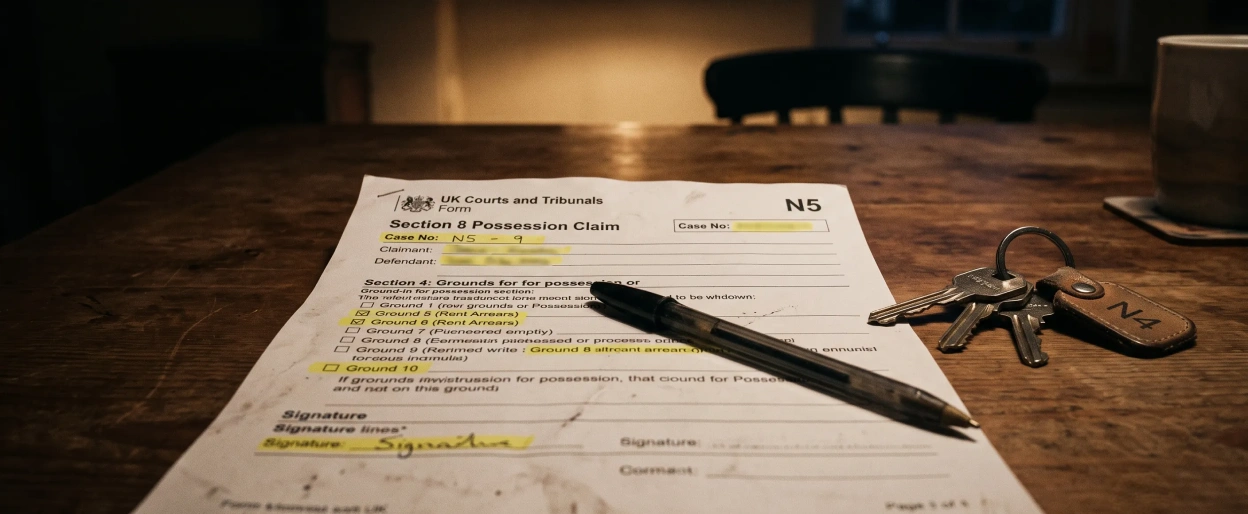
Following the official abolition of Section 21 "no-fault" evictions on 1 May, 2026, under the Renters’ Rights Act, landlords in England can no longer serve notices to evict a tenant without stating a reason. Instead, Section 8 has become the sole legal route for regaining possession, requiring landlords to cite and prove specific, updated legal grounds, such as serious rent arrears, antisocial behaviour, or a genuine intent to sell or move into the property.
Rent arrears
A common mistake landlords make is waiting too long to take formal action when a tenant stops paying rent. There are understandable reasons why landlords hesitate – they may be sympathetic to the tenant’s situation, similar situations in the past may have been only temporary, or the landlord may not review their accounts regularly enough to notice. But the longer arrears build up, the harder they become to recover – as the debt increases, the likelihood that the tenant can settle it with a simple one-off payment becomes more remote. And the legal routes to recover outstanding rent are robust, but the process takes time. Acting early, with proper legal advice, maximises your chances of recovering what you're owed.
Compliance gaps
Regulations change, certificates expire, and what was compliant when you first let a property may no longer be compliant today. Common gaps include expired gas safety certificates, missing or incorrectly served prescribed information relating to tenancy deposits, failure to obtain or renew an HMO licence, and failure to provide tenants with the required documents at the start of a tenancy – all of which can cause legal issues down the line. For example, if you later need to make a possession claim, and a tenant challenges it, the court may not grant possession if you're unable to demonstrate proper protection of their deposit, regardless of how strong your case is on other grounds.
Tenant counterclaims
Sometimes, a tenant may use allegations of disrepair (which may or may not be valid) to defend themselves against possession proceedings, or at least to stall the process. This can be extremely frustrating, whether or not the allegation is true, as it can create significant delays in the possession process and complicate the case. Courts may order professional inspections to be carried out, including expert reports on the condition of the property, and they may require additional hearings before settling the case. If disrepair is found, it can reduce any award you may receive for rent arrears and may even result in you being required to pay costs.
Agent or management failures
For “hands-off” landlords, letting agents or property management companies serve a useful role in handling day-to-day tenant relationships, maintenance, and queries. But they can’t take over your legal responsibility as the owner of the property. If they fail to perform: ignoring reports of disrepair, mishandling rental payments or deposits, or failing to properly notify tenants about necessary visits or inspections, ultimately, you’re liable.
If something goes wrong and a dispute arises, you should seek legal advice urgently. While you may have a valid claim against the agent, you’ll also need to deal with any claim from the tenant in the meantime. It’s vital that you have access to qualified legal support, especially when fighting on more than one front.
What should landlords do to protect themselves?
Running a compliant, legally sound lettings operation isn't difficult, but it does require a system. The landlords who avoid disputes – or resolve them quickly when they do arise – tend to share a few common practices.
Maintain documentation from day one
Every tenancy should begin with a properly executed agreement and a clear record that all statutory obligations have been met. That means copies of gas and electrical safety certificates, proof of deposit protection and service of prescribed information, confirmation that you have provided the EPC and How to Rent guide and a dated inventory with photographs. If you ever need to serve a notice or defend a claim, this documentation will be vital.
Always respond promptly, and in writing
Whenever a tenant reports a maintenance issue to you, whether verbally or in writing, send them an initial written response within a day or two to acknowledge the issue and explain how and when you will address it. Keep a record of every step you take from then on, including copies of any further correspondence with the tenant. If the tenant later brings a disrepair claim against you, having access to written, dated evidence will significantly strengthen your legal position.
Don't delay when it comes to enforcing your rights
Many landlords value the friendly relationship they have with their tenants, but it’s important to remember you’re running a business. When tenants infringe upon your rights – failing to pay rent, causing damage or nuisance, breaching the tenancy agreement – you should act early to avoid the situation getting out of hand. A formal letter from a solicitor as soon as you’re aware of an issue can often resolve matters without further action.
Audit your portfolio regularly
If you manage multiple properties, or rely on a management company or agent to do so for you, you should have a process in place to stay on top of your compliance obligations. It’s easy to get caught out by a safety certificate expiring, missing a deadline for an electrical inspection or forgetting to check that new tenants have received all the documentation they require. Schedule a regular audit session to review each of your tenancies and stay up to date on any regulatory or legal changes, ensuring every base is covered.
Frequently asked questions
A tenant has stopped paying rent but hasn't breached any other terms. What's the fastest way to regain possession?
If the only issue is rent arrears, your primary option is a Section 8 notice to seek possession. Under the Housing Act 1988, a Section 8 notice (specifically Ground 8, which is a mandatory ground for possession) applies where at least three months’ rent is unpaid at the time the notice is served and at the time of the hearing (this has increased from two months’ rent since 1 May 2026). If you can prove this ground, then the court is obliged to grant you possession of the property. If you’re not sure about how to proceed, talk to Complex Law, and we’ll assess the strength of your case and advise on the best strategy.
My tenant is claiming the property is in disrepair, but I was never told about any issues. What should I do?
Courts take disrepair seriously, so even if your initial reaction is that your tenant must be exaggerating the issue, you should investigate the matter as a priority. The best first step is to arrange an inspection as soon as possible, preferably by an independent surveyor who can provide an objective report on the condition of the property. Double-check previous correspondence – especially unopened post, spam email folders, unread text messages – to verify that you were not notified. Then, speak to Complex Law. We’ll advise you on your legal position and manage any counterclaim while keeping your possession or recovery proceedings on track.
I think my letting agent hasn't properly protected my tenant's deposit. What are the consequences?
The consequences can be severe. If a deposit hasn't been protected in an approved scheme (or if the prescribed information hasn't been correctly served), you’re in breach of your legal obligations. The tenant can apply to the court for compensation of between one and three times the deposit amount. The court may also decide that your tenants do not have to leave the property when the tenancy ends if you did not use a TDP scheme when you should have.
A tenant's solicitor has sent me a letter alleging harassment. I've only visited the property to carry out a routine inspection. What do I do?
You must take the matter seriously, whether or not the allegation is true. Don’t make further visits to the property without seeking legal advice, as this is likely to make matters worse, and can weaken your legal position. Gather any evidence you have relating to your visit: ideally, written communication with the tenant ahead of the visit, stating the time, date and purpose. Then, speak to Complex Law. We’ll help you demonstrate that your conduct has been lawful and reasonable, and plan further legal action or defence as needed to uphold your rights and allow you to carry out necessary inspections in future.




.svg)