.svg)


%201.svg)
%201.svg)


.svg)
30/4/2026

8
Min
.webp)
Thomas Blanchfield
A homeowner's guide to protecting your property rights.
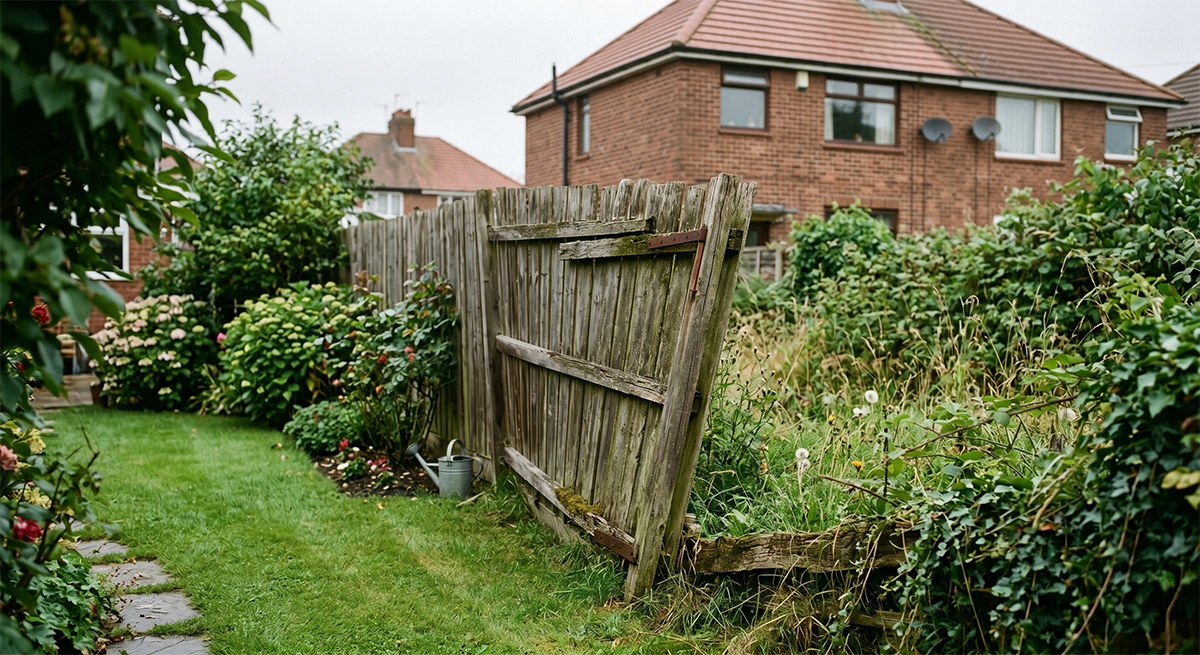
Are you involved in a dispute with a neighbour over a fence, wall, or boundary line? Discover the correct steps to take and the evidence you’ll need to protect your property rights.
Common myths around boundary disputes
Boundary disputes are often fuelled by misunderstandings about how boundaries are legally defined. Here are a few of the common misconceptions – and the legal reality.
Myth: “The Land Registry plan shows the exact boundary.”
Reality: The red line on a Land Registry title plan is not a definitive statement of the precise legal boundary. UK law operates under a "general boundaries rule," meaning the plan shows the approximate position of the boundary, not its exact location down to the centimetre. The plan remains useful evidence, but it doesn’t generally settle the matter on its own.
Myth: “The deeds will have a perfect map that proves my case.”
Reality: Again, in an ideal world, this would be the case, but it’s often more complicated than that. While the deeds for newer properties may include precise measurements and locations to denote boundaries, older deeds are often more vague – sometimes relying on descriptions like “from the oak tree to the stone post”.
Myth: “I've used this land for years, so now it's mine.”
Reality: This is a simplified version of a legal concept called "adverse possession" (or "squatter's rights"), but in reality, it's incredibly difficult to prove. In short, a successful claim would require you to prove you have had exclusive possession of the land for a decade or more without the owner’s consent. It’s a complex area of law with many hurdles to clear – and not usually a valid solution to a boundary dispute.
What’s the best way to handle a boundary dispute?
If a neighbour raises a boundary issue or you spot an encroachment, it’s important not to ignore it – the issue won’t go away, and it could cause more stress if you postpone addressing it – for example, if the issue is still ongoing when you wish to sell the property. But it’s important to tread carefully, to avoid making the situation worse.
Stay calm and avoid escalation
It’s a good idea to discuss any boundary issues with your neighbour first – there may be a simple and mutually acceptable resolution. But if the conversation doesn’t go well, don’t get drawn into a heated argument. And don’t take action yourself, such as moving a fence or cutting down a tree. This can complicate your legal position.
Gather your evidence
Locate your property's title deeds, especially the original conveyance or transfer document if you have it. This is one of the most useful pieces of evidence in this type of case. You could also locate any old photos of the property that show the boundary features, if these are available.
Explore mediation
If you’re unable to reach an agreement with your neighbour, you might consider mediation, which offers a structured, moderated way to find a solution acceptable to both parties without the cost of a court case.
Consider a joint surveyor
You and your neighbour could also agree to jointly appoint an independent boundary surveyor to provide an expert determination on the exact location of the boundary, without bias towards one property owner or the other. This can be a cost-effective way to resolve the dispute.
Seek specialist legal advice
For any dispute regarding property boundaries that can’t be solved between you and your neighbour, we’d recommend seeking specialist legal advice. If you choose to work with Complex Law, you’ll have access to experienced solicitors with specific expertise in UK property law who can assess your evidence and provide a clear, objective opinion on your legal position and the strength of your case.
Legal terminology about property boundaries – in plain English
Quick Quiz
How much did you learn about this topic?
Quiz: Question 1 of
5
Quiz Complete
You scored X out of
5


.webp)




.svg)