.svg)


%201.svg)
%201.svg)


.svg)
7/7/2026

8
Min

What you need to know about military hearing loss claims
In this guide, solicitor and hearing loss claim expert Luke Chorley explains how hearing damage occurs during military service, when the MoD may be liable, and the practical steps you should take if you want to pursue a civil compensation claim.
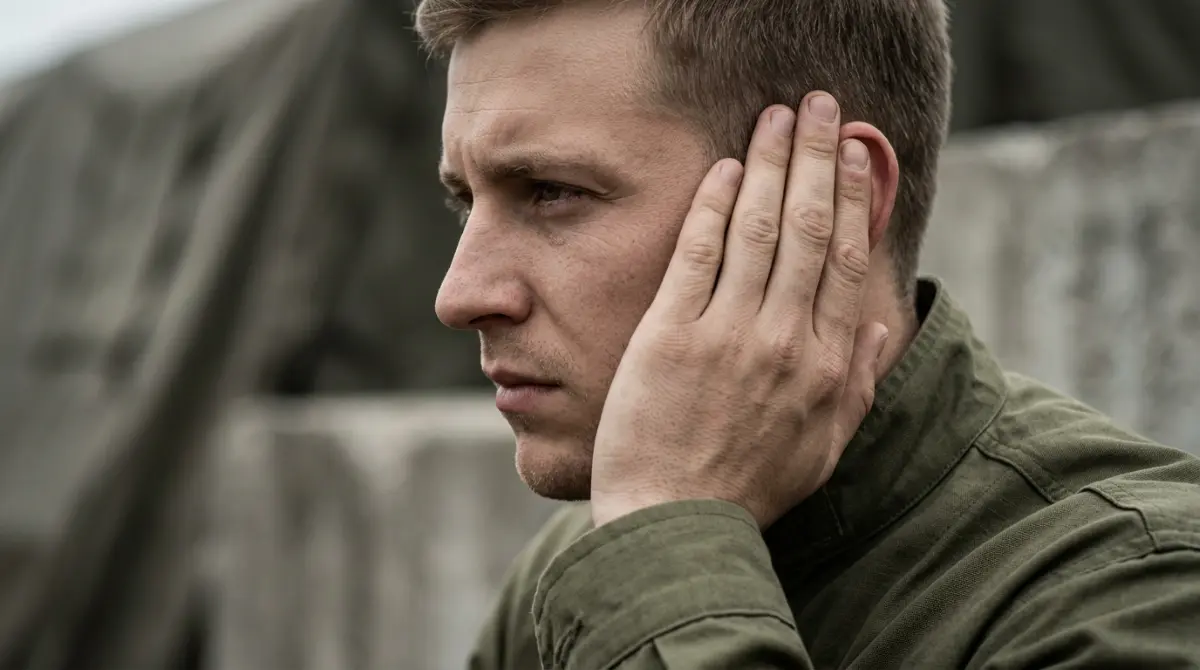
Noise-induced hearing loss and tinnitus are among the most common injuries sustained during military service. Despite this, thousands of veterans and serving personnel don't realise they have grounds for a civil compensation claim – or wrongly believe that because they accepted the risks of military life, they've forfeited their right to hold the MoD accountable.
What conditions are covered by military hearing loss claims?
Military hearing loss claims typically involve two conditions, which can occur either in isolation or in combination: noise-induced hearing loss and tinnitus. Both conditions are recognised as compensable injuries in civil law, and either can form the basis of a claim.
Noise-induced hearing loss (NIHL)
NIHL is a permanent reduction in hearing caused by exposure to loud noise – usually from repeated exposure over time, but also resulting from exposure to a single extremely loud event. Often, people affected don’t notice the decline in the early stages. It may only become apparent when symptoms worsen or when they undergo a hearing test.
Tinnitus
Tinnitus is the perception of sound, usually ringing, buzzing, or hissing, when no external source is present. It varies in frequency and severity. For some sufferers, it’s an intermittent issue which can be managed around day-to-day life. For others, it has a significant negative impact on sleep, concentration, and mental health, in some cases requiring them to give up work. It’s often linked with hearing loss, but it can occur on its own (i.e. even when hearing tests show normal results).
When is the MoD liable for hearing damage?
The mere fact that hearing loss occurred during military service does not automatically make the MoD liable for the damage. Liability occurs when it can be established that the MoD failed in its duty of care to a service member, and that this failure caused or materially contributed to your condition. In the cases we’ve handled, the most common areas where the MoD has been found to have breached its duty of care are:
Failure to provide adequate hearing protection
The MoD is required to assess noise risks and provide hearing protection that is appropriate to the environment. If protection was not issued – as was common in earlier decades – or if the protection provided was ill-fitting, insufficient for the noise levels involved, or unsuitable for the operational context, this may constitute a breach of duty.
Failure to enforce the use of hearing protection
There are many reasons why personnel may not have used available hearing protection: to speed up a training exercise, to communicate more clearly, or because of a culture of “toughness”. Regardless, the MoD has a duty to enforce the use of appropriate protection through the chain of command.
Failure to monitor hearing
Military personnel who are regularly exposed to hazardous noise levels should receive periodic audiometric testing. This allows early detection of hearing decline and gives the MoD an opportunity to intervene – by rotating individuals out of high-noise roles, adjusting protection, or providing treatment. A failure to monitor (or a failure to act on the results of monitoring) can form part of a negligence claim.
Failure to warn of risks
As a military professional, you’re entitled to be informed about the risks associated with noise exposure, the potential for permanent hearing damage and the importance of hearing protection. If you weren’t, this adds weight to any claim.
How does the claims process work?
If you choose to work with Complex Law to bring a civil claim for military hearing loss, you can expect a straightforward, transparent process, with your options explained in plain English each step of the way. Here’s how the process works in practice.
Initial assessment
We start with a free consultation during which we’ll ask you questions about your service history, the specific roles or events that involved exposure to noise, and the symptoms or conditions you are now experiencing. This helps us to establish whether you have valid grounds for a claim.
Medical evidence
If we’re proceeding with a claim, the first evidence we need to gather is expert proof of the type and severity of your hearing loss and its impact on your daily life, as well as the likely cause of the injury. To do so, we'll arrange an independent audiological assessment with a specialist experienced in military hearing cases, who will provide a report that we can use as part of the claim.
Supporting evidence
Next, we'll obtain your military service records (including details of postings, roles, and any hearing tests conducted during service) and compile any other evidence that supports the claim – witness statements, documentation relating to hearing protection policies, and records of any complaints or reports you made at the time.
Letter of claim
Once we have all the evidence available, we will compose and send a formal letter of claim to the MoD. This sets out the legal basis for the claim, the evidence supporting it, and the compensation sought. The MoD then has a set period to investigate and respond.
Negotiation and settlement
In many cases, the MoD will make an offer of settlement, and the claim is resolved through negotiation without ever reaching court. We'll advise you on whether any offer is fair and proportionate, and we won't recommend acceptance unless we believe it properly reflects your losses.
Court proceedings (if necessary)
If the MoD denies liability or makes an offer that doesn't reflect the value of your claim, we can issue proceedings in the County Court. While most cases settle before trial, we'll prepare your case to the standard required for litigation from the outset, so that the MoD knows you're serious.
What does UK law say about military hearing loss?
Under UK law, the Ministry of Defence (MoD) has a legal duty of care to provide personnel with safe environments and adequate hearing protection. Personnel who suffer Noise-Induced Hearing Loss (NIHL) or tinnitus due to service have the right to pursue compensation.
There are two routes. The first is to pursue statutory compensation schemes, which include the Armed Forces Compensation Scheme (AFCS) for injuries and conditions caused by service on or after 6 April, 2005, and the War Pension Scheme (WPS), which covers hearing loss caused by service prior to that date. If a statutory scheme payout is insufficient or has been previously rejected, the second route is to pursue a civil negligence claim against the MoD.
Quick Quiz
How much did you learn about this topic?
Quiz: Question 1 of
5
Quiz Complete
You scored X out of
5

.webp)


.svg)