.svg)


%201.svg)
%201.svg)


.svg)
18/6/2026

10
Min
.webp)
David Whelan
A guide to the legal issues around knotweed, and when you have grounds for a claim.
In this guide, our specialist solicitor David Whelan explains how to identify knotweed, what steps to take if you find it on your property, and where you may have grounds for a claim if another party is responsible for the growth.
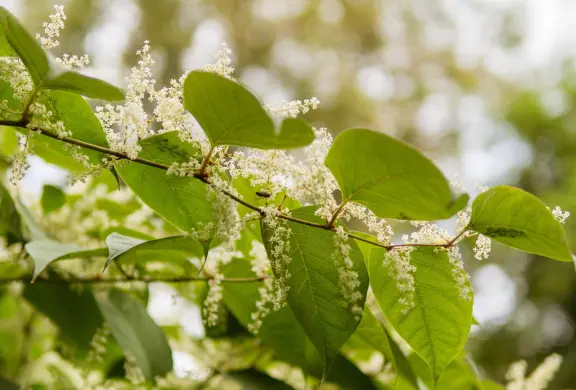
A guide to the legal issues around knotweed, and when you have grounds for a claim.
In this guide, our Japanese knotweed legal expert, David Whelan, explains why knotweed is such a serious issue for homeowners or prospective buyers, what to do if you identify the plant on a property you own or are planning to buy, and common mistakes you should avoid when dealing with knotweed.
Why is Japanese knotweed a serious issue for homeowners?
Japanese knotweed was originally introduced to the UK in the mid-nineteenth century as an ornamental garden plant, but soon became one of the most problematic invasive species in the country.
Structural damage
There's a good reason that Japanese knotweed is so strictly controlled by law. Extensive growth can cause major structural damage to buildings and infrastructure: rupturing drains or sewers, undermining foundations, and pushing through cracks in concrete to damage walls and paving. Even when the plant isn't visible above ground, its extensive root network can be gradually causing hidden damage.
Lower property value
It's harder to sell a property with Japanese knotweed present. You're obliged to disclose the presence of the plant on the TA6 form, and usually that means buyers will demand a discount (as they will have to bear the cost of removal). Or they may be unable to get a mortgage to purchase the property at all. Many mortgage providers view knotweed as an unacceptable risk.
Personal liability
If you have Japanese knotweed on your property, you're liable in certain cases. It's not an offence to have it growing on your land, nor is it an offence to leave it untreated. But if you allow it (through action or inaction) to spread to wild land or to a neighbour's property, then you're in breach of the law. Deal with the issue promptly to reduce your legal exposure.
Treatment costs
Knotweed grows and spreads quickly, so the longer the delay between identifying it and dealing with it, the higher the cost of rectifying the problem. Specialist contractors are required to deal with knotweed, and this comes at a premium. Depending on where the plant is growing and how well developed its root system is, the solution may involve expensive herbicide treatment or disruptive excavations.
I've found (or suspect) there's Japanese knotweed on my property. What do I do next?
Get a professional identification
Before spending time and money on removal, be sure you're actually dealing with Japanese knotweed. Plants like Himalayan honeysuckle, Russian vine, and broadleaf dock sometimes resemble knotweed growth but are not nearly as damaging (or as legally controlled).
Seek expert help
Don't attempt to remove or disturb the plant yourself. It could spread further, including to neighbouring properties, which could make you legally liable for your neighbour's costs. Find a professional contractor, ideally one accredited by the Property Care Association (PCA) or the Invasive Non-Native Specialists Association (INNSA). If a neighbour has already made a complaint or claim against you, speak to Complex Law to plan the best legal defence.
Locate the source
Is there visible growth on neighbouring land? Did you buy the property recently? Was a survey carried out before purchase? The answers to these questions help determine who might be liable. If the presence of knotweed on your land is due to another party's actions or negligence, then you shouldn't have to bear the associated costs yourself. You may have grounds for a compensation claim.
Gather evidence
The success of any potential claim will depend on the evidence available. Photograph the plant and any visible damage, as well as any evidence of knotweed outside, but close to, your property boundary. If you bought the property, locate the TA6 form and check how the seller answered the knotweed question. If a survey was carried out, review it for any mention (or absence of mention) of knotweed.
Work with a specialist law firm
Then, speak to us. At Complex Law, we handle knotweed compensation claims on a no-win, no-fee basis (and offer a clear fee structure for defending claims against you). We'll assess your situation, advise on liability, and manage the entire process from identification and treatment to the recovery of your losses or defence of any claim. Get in touch today.
What legal claim can I make if someone else is responsible for knotweed on my land?
Japanese knotweed claims are based on the principle that someone else's negligence or dishonesty has caused you a financial loss. The three most common scenarios are:
- Encroachment: knotweed spreads from a neighbour's property onto yours. The legal basis here is private nuisance: interference with your use and enjoyment of your land.
- Non-disclosure: a property seller fails to honestly answer the knotweed question on the TA6 Property Information Form. Legally, this may constitute misrepresentation.
- Negligence: a professional surveyor fails to identify knotweed that should reasonably have been detected, or a contractor brings soil contaminated with knotweed onto your land.
Common mistakes to avoid when dealing with Japanese knotweed
Homeowners who discover knotweed sometimes make well-intentioned decisions that worsen their situation. Understanding these common mistakes can help you avoid them.
DIY removal
"I'll sort it myself" is not a good strategy. Cutting knotweed down, strimming it, or trying to dig it out without professional guidance can accelerate its spread, as fragments are dispersed over a wider area. Any cuttings or affected soil are classed as controlled waste. You can't dump them in the green bin or at a recycling centre: knotweed has to be processed at specially licensed facilities.
Delaying action
Knotweed won't go away on its own. In most cases, the longer you leave it, the worse the problem gets, and it can worsen quickly during the growing season. You may be reluctant to pay high removal and treatment costs today, but if you let the plant get out of control, you could soon be facing legal action from your neighbours.
Accepting verbal promises
Japanese knotweed is a serious issue, with potentially huge financial consequences for homeowners. If you've asked a neighbour about knotweed you've seen on their land, don't be satisfied with a general promise to "deal with it". Ask them to confirm in writing what steps they intend to take and when. If they refuse or fail to act, seek legal advice.
What does UK law say about Japanese knotweed?
Under Section 14 of the Wildlife and Countryside Act 1981, it is an offence to plant or otherwise cause Japanese knotweed to grow in the wild. The Anti-social Behaviour, Crime and Policing Act 2014 allows local authorities to issue Community Protection Notices compelling landowners to control knotweed that is affecting neighbouring properties.
Japanese knotweed is classified as controlled waste under the Environmental Protection Act 1990, meaning it must be disposed of at a licensed landfill site. Property sellers are also required to disclose known knotweed issues on the TA6 property information form, and failure to do so may constitute misrepresentation under the Misrepresentation Act 1967.
Need advice on dealing with Japanese knotweed?
Quick Quiz
How much did you learn about this topic?
Quiz: Question 1 of
5
Quiz Complete
You scored X out of
5


.webp)







.svg)