Did your solicitor take an ATE premium without your proper consent?
.webp)
Summary
In this article, Complex Law’s fraud and financial mis-selling specialist, Mark Montaldo, explains how After‑the‑Event (ATE) insurance policies are mis-sold to claimants, what your solicitor was legally required to tell you, and the steps you can take to recover deducted premiums and related charges.
If you've pursued a personal injury, clinical negligence, or other civil claim in recent years, there's a good chance you were sold an After‑the‑Event insurance policy along the way. On the face of it, this makes sense. ATE insurance offers protection in the event that your claim is unsuccessful, and you are directed to pay the other party’s legal costs (plus possibly your own).
But there have been multiple cases where individuals were pressured into taking out ATE insurance they didn’t need, misled to believe that ATE cover was compulsory as part of their claim, or unaware that the solicitor recommending the policy was receiving a financial incentive for doing so.
If you’ve been sold an ATE policy and didn't fully understand what you were paying for, weren't told about cheaper alternatives, or never gave informed consent to the deduction, you may be entitled to reclaim that money.
How does ATE mis-selling happen?
In the vast majority of cases, ATE mis-selling isn’t a matter of deliberate dishonesty on the part of solicitors or insurers – it’s the result of treating the decision to take out the policy as a formality rather than a genuine customer choice. This can result in clients being given incomplete, partial or misleading information, and therefore, they are unable to give informed consent.
Lack of informed consent
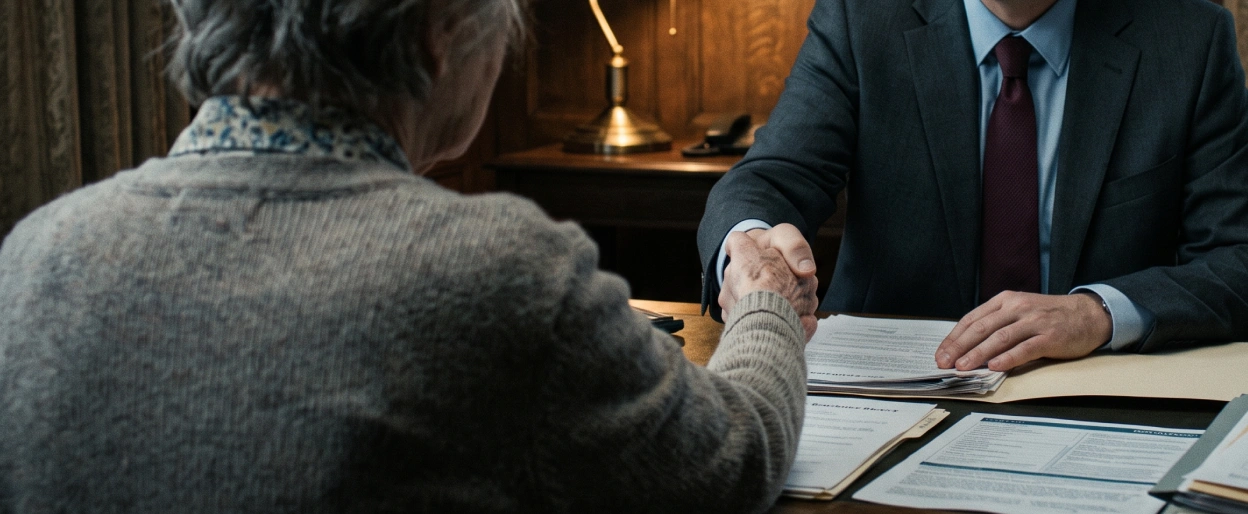
Before you agreed to take out an ATE policy, your solicitor should have fully explained the costs involved, the purpose of the cover and any alternate options available to you. If this didn’t happen – for example if you were simply asked to “sign here – it’s standard” then your consent (i.e. the fact that you signed) may not have been properly informed.
Being told cover was mandatory
There’s no mandatory requirement to take out ATE cover. However, some firms have been known to present it as a compulsory part of pursuing a claim. This is incorrect. In cases we’ve dealt with, there was either no need for the ATE policy at all, or a cheaper policy was available that would have provided adequate cover, but the client was not informed about it.
Unclear or hidden premium costs
Premiums are often deferred and success-based, meaning the true cost isn't obvious until the case concludes. If you were never given a clear written breakdown of the premium, or the amount changed without explanation, this may constitute ATE mis-selling.
Undisclosed commissions or referral arrangements
If a solicitor or their firm stands to receive any type of financial benefit as a result of their client taking out a specific ATE policy, they must disclose this to you before you sign. This could be a commission payment, a referral fee, or preferred treatment by the insurer. If you weren’t made aware of any such arrangement, that constitutes a serious breach of the solicitor's professional obligations.
Cover that duplicated existing protection
In some cases, an ATE policy isn’t necessary because a client already has adequate cover through a home insurance or vehicle insurance policy, or through their membership of an employment union. It’s the responsibility of whoever sold you the policy to check with you about existing cover before recommending an ATE policy you may not need. If you weren’t asked, then the policy may have been mis-sold.
What can you recover?
If your ATE policy was mis-sold, you could be entitled to reclaim more than just the premium itself. Potential outcomes include a refund of the ATE premium deducted from your damages, and any associated financing or loan charges linked to the premium. You may also be able to claim interest on the amounts wrongly deducted, as well as compensation for distress and inconvenience.
How does the claims process work?
ATE misselling claims follow a logical process, beginning with a complaint to the firm that sold you the policy, and escalating from there if you’re unable to resolve the matter to your satisfaction.
Step one: complain to your former solicitors
The first step should always be to give your original firm of solicitors the opportunity to investigate the matter and respond by submitting a formal complaint. This avoids unnecessary escalation and use of resources, and in many cases, the matter can be resolved at this stage.
Step two: escalate to the Legal Ombudsman
If your claim is rejected by your former solicitors, they provide an unsatisfactory response, or they fail to respond at all, then the next level of escalation is to refer the matter to the Legal Ombudsman. This is an independent body set up to investigate and resolve disputes between consumers and legal service providers, and it has the power to order refunds and compensation.
Step three: court proceedings
If it’s not possible to resolve the matter through a formal complaint or via the Legal Ombudsman, then the best course of action may be to issue court proceedings, especially for high-value claims. Action may be against the original solicitors or the insurers, and based on negligence, breach of contract, or misrepresentation – depending on the facts of the case.
Don’t delay once you suspect a problem
Whichever of the legal routes above you intend to follow, be aware that there are time limits in place. Deadlines for making a complaint, referral or claim are usually calculated from the date that you first became aware there was a potential problem, so seek legal advice early to avoid missing any crucial window.
If you choose to work with Complex Law, we’ll handle your case with the urgency it requires, to ensure that all deadlines are met. We'll review your file, assess whether your ATE policy was properly explained and justified, and guide you through the process, with transparent costs and a clear legal strategy from the outset. If you suspect that you may have been mis-sold ATE insurance – even if you’re not sure about the evidence or details of the case – speak to us today for expert plain-English advice.
Frequently asked questions
I signed a form agreeing to the ATE policy. Does that mean I have no claim?
No, the existence of a signature on its own doesn’t mean you don’t still have the right to make a claim. To be valid, a signature must represent informed consent: i.e. you must have been in possession of all the relevant information before signing. If the premium wasn’t explained properly, you were led to believe it was compulsory, or you weren’t told about commission or incentives your solicitor would receive, then your consent may not have been legally valid.
My case settled years ago. Is it too late to claim?
Time limits do apply, so it depends on when you first became aware there might be an issue with your policy, and when the deduction was made. And those limits differ depending on what action you’re seeking to take: making a complaint to the firm, escalating to the Legal Ombudsman, or considering court action. For advice on your specific situation, get in touch, and we’ll be able to give you a clear picture of your options.
Will making a claim affect the compensation I already received?
No, it’s an entirely separate process. A missold ATE insurance claim targets the premium and charges deducted by your former solicitor or the insurer, not the underlying settlement itself. It has no bearing on the original compensation you received, or the liability of the other party in the case.
I don't have copies of my paperwork anymore. Can I still make a claim?
Yes, in theory, if you don’t have the relevant paperwork, your previous solicitor should be able to provide it. They are required to keep copies of your engagement letter, funding agreement, and ATE policy documents for around 6 years after your case was closed. If you’re not sure how to go about requesting these documents from the firm, speak to Complex Law, and we can draft the necessary communications for you.


.svg)