Didn't get your deposit back? Here's what the law says.
.webp)
Summary
In this article, property law expert David Whelan explains the legal rules landlords must follow when handling tenancy deposits, the most common ways they fall short, and the steps tenants can take to recover their deposit and claim compensation.
Landlords in England have strict legal obligations regarding how they handle and protect tenancy deposits, and what deductions they can make from them. The deposit isn’t a fund they can use as they please; it remains your money, and should be returned to you in full at the end of the tenancy unless there are justifiable costs such as damages or rent arrears that your landlord is entitled to recover.
Despite this, disputes over tenancy deposits are one of the most common legal issues that arise between landlords and tenants. Most often, this is not due to malicious intent on either side, but a misunderstanding of the legal requirements that apply to deposits. In this article, our property dispute specialist David Whelan explains what the law requires, where landlords most often go wrong, and how to take action if you think you've been treated unfairly as a tenant.
What are landlords required to do with your deposit?
If you rent under an assured tenancy – the standard form of private tenancy in England since the Renters' Rights Act 2025 replaced assured shorthold tenancies (ASTs) with periodic assured tenancies from 1 May 2026 – your landlord (or their agent) must protect your deposit in one of the government-approved schemes within a set timeframe of receiving it, and provide you with specific information confirming how and where it's protected. At the end of the tenancy, they must return the deposit promptly, only deducting amounts that are fair, evidenced, and either agreed with you or resolved through the scheme's dispute service.
The most common ways landlords fall short
Failing to protect the deposit at all
Some landlords fail to use an approved deposit protection scheme and simply retain your deposit in their own bank account. This is a serious breach of their legal obligations, but from a tenant’s point of view, it’s one of the easiest breaches to prove. You can check online with each of the three government-approved providers and see if your deposit has been registered with them, usually within a matter of minutes.
Protecting the deposit late
The requirement for landlords to protect your deposit comes with a deadline of 30 calendar days from receipt: it’s not a matter of “when they get round to it”. If your landlord has delayed in registering your deposit with one of the three approved protection schemes, then they have committed a breach, which may give you grounds for a claim (and could result in a financial penalty for the landlord).
Failing to serve the prescribed information
As well as protecting your deposit correctly and on time, landlords must provide certain prescribed information to their tenants about the specific scheme they have used, how it works, and how disputes are resolved. If you haven’t been provided with any such information, that is also a potential breach, even if your deposit was protected within the correct legal timeline.
Making unfair deductions
Landlords are entitled to make deductions from a tenant’s deposit to cover damage (beyond reasonable wear and tear), cleaning or rent arrears. However, they have to be able to justify the amounts deducted and show how the money was spent. If you disagree that a deduction was reasonable, you don’t have to simply accept it – you can dispute it with the deposit protection scheme or make a legal claim.
Delaying the return of the deposit
Even if there are no deductions and no disputes, sometimes landlords are simply slow to return deposits. If you’ve experienced unreasonable delays, without justification, in getting your deposit back from a landlord at the end of a tenancy, you may have grounds for a claim.
What can you claim?
Depending on the nature of the breach, you may be able to recover:
- the return of your deposit (in full or in part, depending on the dispute)
- compensation of between one and three times the deposit amount, where the landlord failed to protect it correctly or failed to serve the prescribed information
- your legal costs, in cases where court proceedings are necessary and successful
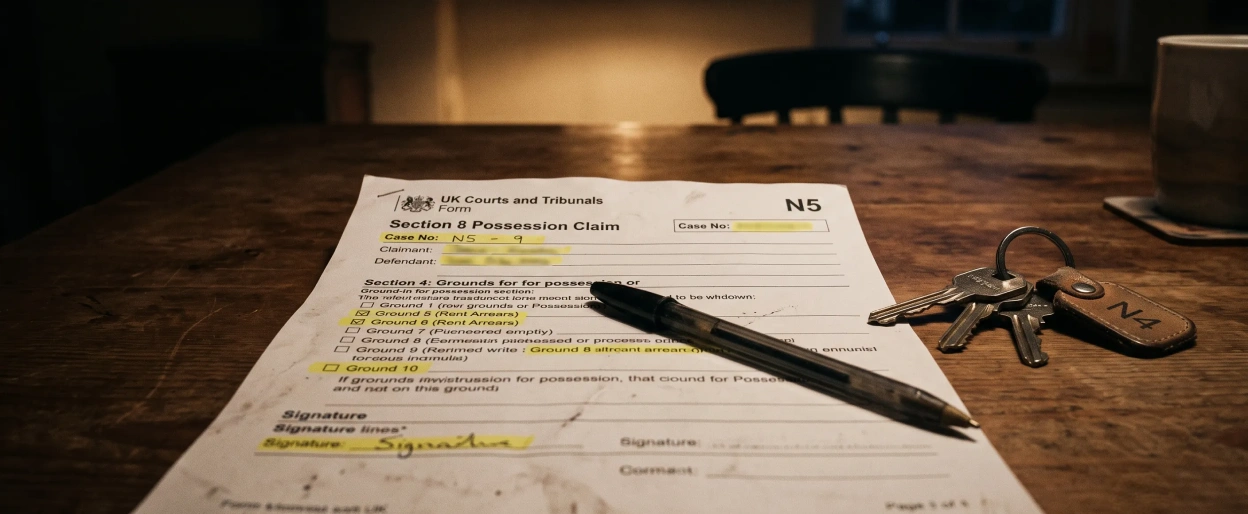
It’s also important to be aware, as a tenant, that if landlords are not compliant with their obligations around deposit protection, this can prevent them from obtaining a court order for possession of the property. So, if you have been served a notice under Section 8 (your landlord is trying to evict you), but you believe that your deposit hasn’t been protected correctly, on time, or you haven’t received the prescribed information, you should seek legal advice promptly.
How the claims process works
Step one: check the protection status
Before doing anything else, confirm whether your deposit is actually protected, and by which scheme. This tells you what breach (if any) you're dealing with.
Step two: gather your evidence
Pull together your tenancy agreement, deposit receipt, any prescribed information you received, check-in and check-out inventories, and all correspondence relating to the deposit and any proposed deductions.
Step three: send a letter of claim
A formal letter setting out the breach, the evidence, and what you're seeking often resolves matters without the need for court action. Landlords and agents are more likely to respond seriously to a solicitor's letter than a text message.
Step four: use the scheme's dispute resolution service, or go to court
If the dispute is only about the amount of a deduction, the scheme's free adjudication service may be the fastest route. If the dispute concerns a failure to protect the deposit or serve prescribed information, court proceedings are usually the appropriate route to recover compensation.
Don't assume it's too late
In our experience, tenants often – incorrectly – assume that once they’ve moved out, or once the landlord has returned their deposit (or part of it), that they’ve missed the opportunity to make a claim. That’s not necessarily the case. Any breach of the landlord’s obligations that occurred at any time during the tenancy may be pursued after the tenancy has ended.
However, there are limitation periods in place, so it’s always advisable to seek legal advice as soon as possible after you realise you may have a claim. Speak to Complex Law, and we'll review your tenancy, identify whether a breach occurred, and advise you on the best route to recovering your deposit and any compensation you're entitled to.
Frequently asked questions
My landlord returned my deposit months late and never explained why. Do I have a claim?
Yes, it’s possible that you have a valid claim. Taking an unreasonable length of time to return a tenant’s deposit, without providing any justification for the delay, can equate to a breach on the landlord’s part, in which case you could be entitled to compensation. Speak to Complex Law, and we’ll review the specific facts of your case and assess if a compensation claim is an option for you.
My agent handled the deposit, not my landlord directly. Who is liable?
Landlords commonly use lettings agents to take on the administrative work of managing a tenancy, but they can’t delegate the legal responsibilities. The landlord is always legally responsible for ensuring the deposit is protected and handled correctly, whether they do this themselves or it is done on their behalf. If an agent makes a mistake, any claim would still be against the landlord.
My landlord deducted money for cleaning and damage I don't think is fair. What should I do?
If deductions from your deposit are necessary, you’re entitled to know the purpose and amounts. Ask your landlord to provide an itemised breakdown and supporting evidence, such as invoices, photographs, or a check-out report. If you still think that the deductions are unfair, then you can dispute them through the resolution service provided by whichever deposit scheme your landlord used. If the amount is significant, or if your landlord is being uncooperative, speak to Complex Law for qualified legal advice on the best way forward.
I never received any confirmation of which scheme protects my deposit. Does that matter?
Yes – your landlord is required to tell you which scheme is being used to protect your deposit and give you details about the scheme (known as “prescribed information”) within a specific period. If you never received this information, then that counts as a breach – even if the landlord protected your deposit correctly.



.svg)